 Meridian
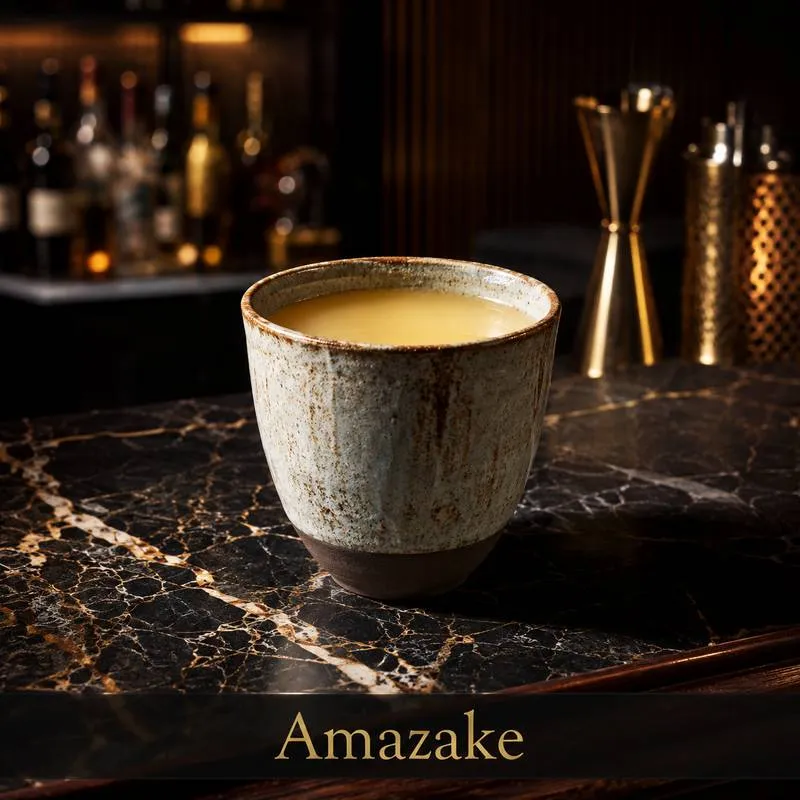
Amazake Cocktail Recipe from Japan
Pronunciation: ah-mah-ZAH-keh · Origin: Japan · Glass: Ceramic Mug · Difficulty: Beginner · Strength: 0 to 1% ABV · Serve: Hot · Style: Flat · Era: Ancient & Medieval · Season: New Year, Summer · Flavour: Sweet, Rich, Herbal, Spicy
What it tastes like
Thick, velvety, and naturally sweet from the saccharification of rice starch, with no added sugar required. Tastes of fresh steamed rice, gentle fermentation, and clean grain sweetness. Ginger adds warming spice. Nourishing rather than intoxicating, with little or no alcohol.
Ingredients
- 120 ml (4 oz) Amazake (sweet fermented rice drink)
- 60 ml (2 oz) Hot water
- 0.25 tsp Fresh ginger, grated
Method
- Gently warm the amazake in a small saucepan; do not boil. If using concentrated paste, dilute it with the hot water.
- Stir in the hot water to loosen the texture.
- Pour into a small ceramic cup or bowl.
- Top with freshly grated ginger.
- Serve immediately while hot.
Sourcing the ingredients
Sourcing difficulty: Moderate
Amazake is available at Japanese grocery stores in concentrated paste form or ready-to-drink bottles. Marukome and Hakkaisan are among the producers. Dilute paste versions with hot water before serving.
History
Amazake, literally ‘sweet sake’, is one of the oldest beverages in Japanese history: it is often dated to the Kofun period (3rd to 7th century CE) and is mentioned in the Nihon Shoki (720 CE). It is made using koji fermentation of rice, the same process that underlies sake, miso, and soy sauce production. The Nihon Shoki tells of ama-no-tamuzake, brewed to celebrate the birth of a child to the goddess Konohanasakuya-hime, a drink often regarded as a prototype of amazake. Its exact date of origin is unclear. Amazake peddlers appeared by the Muromachi period, and in the Edo period (1603 to 1868) it became a drink of ordinary people: it was drunk year-round in Edo but was especially valued in summer to fight summer fatigue, and the shogunate capped its price.
Cultural significance
Amazake is intimately connected with Japanese seasonal and religious calendar. Many Shinto shrines and Buddhist temples offer or sell it during the New Year (Oshogatsu), it is served at the Girls’ Festival (Hinamatsuri) on March 3rd in place of the mildly alcoholic shirozake, and it appears at various seasonal matsuri throughout the year. Its reputation as a health drink, rich in glucose, vitamins, and koji-produced enzymes, makes it part of Japan’s functional food tradition. Contemporary interest in fermented foods and gut health has sparked a major amazake revival, with craft producers creating artisanal versions across Japan.
Food pairings
- Mochi
- Japanese sweets
- Rice cakes
- Grilled rice balls
Get Meridian
Keep all 888 drinks from 141 countries in one app: search any drink by name, browse by country, filter by flavour, switch between ml and oz and save your favourites. One price, no ads, no account, and it works offline.