 Meridian
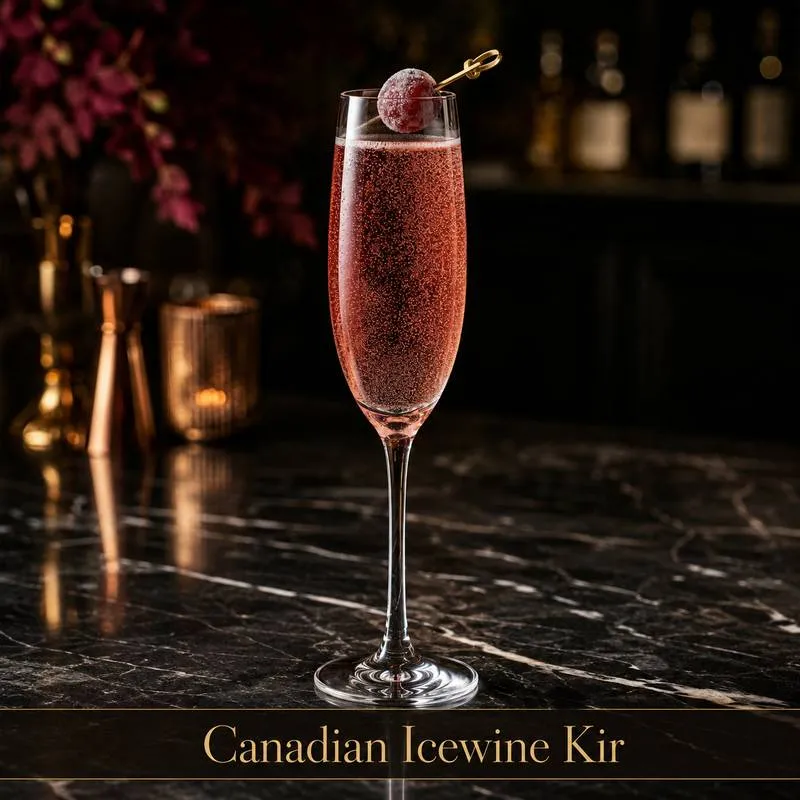
Canadian Icewine Kir Cocktail Recipe from Canada
Pronunciation: kuh-NAY-dee-un ICE-wine KEER · Origin: Canada · Glass: Champagne Flute · Difficulty: Beginner · Strength: about 12% ABV · Serve: Cold · Style: Sparkling · Era: Modern Craft · Flavour: Sweet, Fruity, Refreshing
What it tastes like
Intensely sweet and aromatic: the icewine contributes concentrated flavors of ripe peach, apricot, honey, and tropical fruit that sparkling wine cannot approximate. The dry bubbles add freshness and carry the icewine’s aromas upward. The finish is long and honeyed with balanced acidity.
Ingredients
- 30 ml (1 oz) Canadian Vidal icewine
- 120 ml (4 oz) dry sparkling wine or brut prosecco
- 1 piece frozen grape or thin pear slice, for garnish
Method
Chill a champagne flute thoroughly. Pour the icewine into the flute first. Slowly pour the cold sparkling wine over the icewine, tilting the glass to preserve bubbles. Do not stir: the two wines will integrate naturally. Garnish with a single frozen grape or a thin pear slice.
Sourcing the ingredients
Sourcing difficulty: Moderate
Canadian Vidal icewine from Niagara Peninsula (Inniskillin, Jackson-Triggs, Pillitteri) is the benchmark; Riesling icewine from Okanagan Valley in British Columbia is equally excellent. Look for VQA-certified Canadian icewine. A dry, neutral sparkling wine balances the icewine’s intense sweetness: avoid sweet prosecco. Serve very cold.
History
Canadian icewine dates to 1973, when Walter Hainle made the first in the Okanagan Valley, and it won worldwide recognition when the 1989 Vidal icewine from Inniskillin Winery in Niagara-on-the-Lake was awarded the Grand Prix d’Honneur at the 1991 Vinexpo in Bordeaux. Icewine (Eiswein in German) is produced when naturally frozen grapes are harvested and pressed at temperatures of -8°C or colder, concentrating the sugars and acids into a tiny amount of extraordinarily complex juice. Canada, particularly the Niagara Peninsula of Ontario, has become the world’s largest producer of icewine due to its reliably cold winters. The Kir format (classically a splash of crème de cassis in white wine, or in Champagne for the Kir Royale, named after Félix Kir, mayor of Dijon) has been adapted to showcase Canadian icewine as a cocktail ingredient. Who first made the Canadian Icewine Kir, and when, is not documented.
Cultural significance
Canadian icewine is one of the country’s most significant contributions to the world of wine, and the Niagara Peninsula’s success with it has helped establish Canada as a serious wine-producing nation in international eyes. The product represents a particular Canadian attitude toward winter: rather than being defeated by the cold, the winemakers of Niagara and the Okanagan have turned extreme cold into an asset, producing something that warm-climate wine regions cannot replicate. The Kir format makes icewine accessible as a cocktail ingredient to people who might not purchase an entire bottle of the expensive nectar, democratizing a luxury product while preserving its essential character.
Food pairings
- Strawberries
- Macarons
- Soft cheese
- Fruit tarts
Get Meridian
Keep all 888 drinks from 141 countries in one app: search any drink by name, browse by country, filter by flavour, switch between ml and oz and save your favourites. One price, no ads, no account, and it works offline.