 Meridian
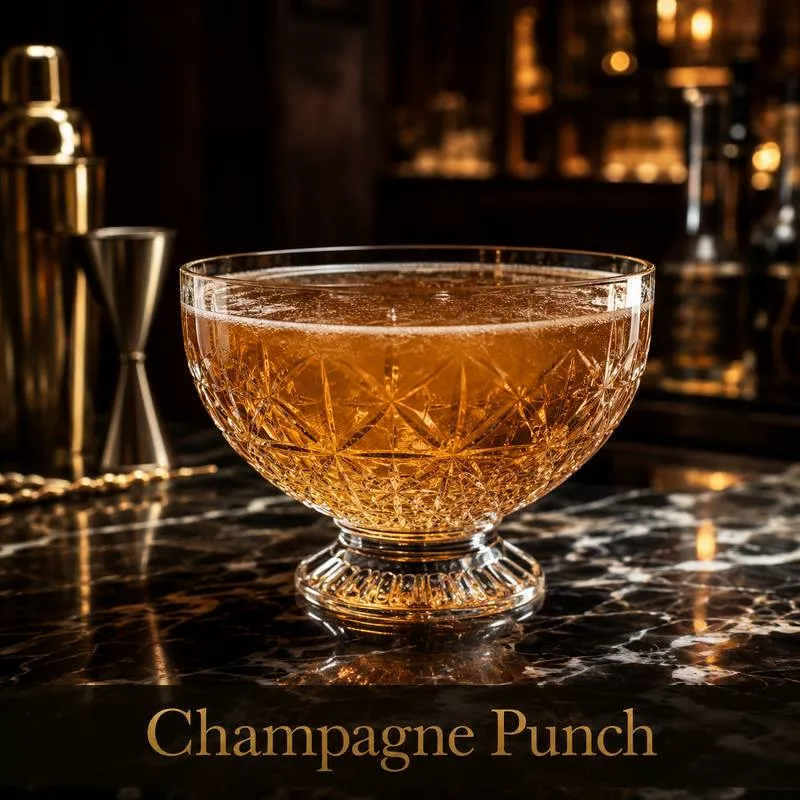
Champagne Punch Cocktail Recipe from France
Pronunciation: sham-PAYN PUNCH · Origin: France · Glass: Punch Cup · Difficulty: Intermediate · Strength: about 12% ABV · Serve: Cold (4 to 7°C / 39 to 45°F) · Style: Sparkling · Era: Victorian · Season: New Year, Weddings & Celebrations · Flavour: Effervescent, Citrusy, Fruity, Elegant
What it tastes like
Crisp, elegant, and effervescent: dry sparkling wine lifted by cognac warmth and orange-liqueur sweetness, brightened with lemon and fresh berries. Sophisticated, light, and celebratory, with a fine, lasting fizz.
Ingredients
- 1500 ml (50.75 oz) Champagne or Brut Sparkling Wine
- 180 ml (6 oz) Cognac
- 120 ml (4 oz) Orange Liqueur (Grand Marnier)
- 120 ml (4 oz) Fresh Lemon Juice
- 120 ml (4 oz) Sugar Syrup
- 250 ml (8.5 oz) Brewed Green Tea (optional)
- 200 g (7.1 oz) Mixed Berries
- 10 slices Orange and Lemon Wheels
Method
This is a large-format punch serving 12 to 18 people.
-
In a punch bowl, stir together the cognac, orange liqueur, lemon juice, sugar syrup, and the optional green tea to build the base.
-
Add the mixed berries and citrus wheels and let them macerate for 15 to 20 minutes.
-
Add a large ice block (ideally one with frozen berries inside).
-
Pour in the chilled Champagne slowly, down the side of the bowl, just before serving to keep the fizz.
-
Stir once, gently, and ladle into punch cups.
Sourcing the ingredients
Sourcing difficulty: Moderate
Use a dry, inexpensive but decent sparkling wine; saving fine Champagne for the glass is sensible here. Cognac and Grand Marnier are common. Keep the sparkling wine refrigerated until the last moment to preserve the bubbles.
History
Champagne punch flourished in the 19th century, when sparkling wine from France’s Champagne region was the ultimate symbol of luxury and celebration. No single origin is documented; it is listed under France because its defining ingredient is Champagne. When it was first made is not documented. Mixing it into a punch with brandy, liqueurs, citrus, and sometimes tea allowed hosts to stretch precious Champagne across a large gathering while showcasing their wealth. Champagne punches appear in 19th-century bar guides: the Regent’s Punch, first recorded in 1817 and made with brandy, arrack, liqueurs, citrus, green tea and champagne, helped bring champagne into British and American mixology and appears in Jerry Thomas’s ‘Bar-Tender’s Guide’.
The drink became a fixture of grand balls, weddings, and New Year celebrations on both sides of the Atlantic, the bubbling punch bowl serving as a glittering centerpiece of festive society.
Cultural significance
Champagne punch is enduringly associated with celebration, luxury, and milestone occasions, carrying the prestige of Champagne itself into a communal, shareable form. It exemplifies the Victorian art of the lavish punch bowl as social spectacle and remains a go-to for weddings, anniversaries, and New Year’s Eve toasts, where the sparkling bowl signals festivity and refinement.
Food pairings
- Oysters
- Canapés
- Smoked salmon
- Fruit tarts
Get Meridian
Keep all 888 drinks from 141 countries in one app: search any drink by name, browse by country, filter by flavour, switch between ml and oz and save your favourites. One price, no ads, no account, and it works offline.