 Meridian
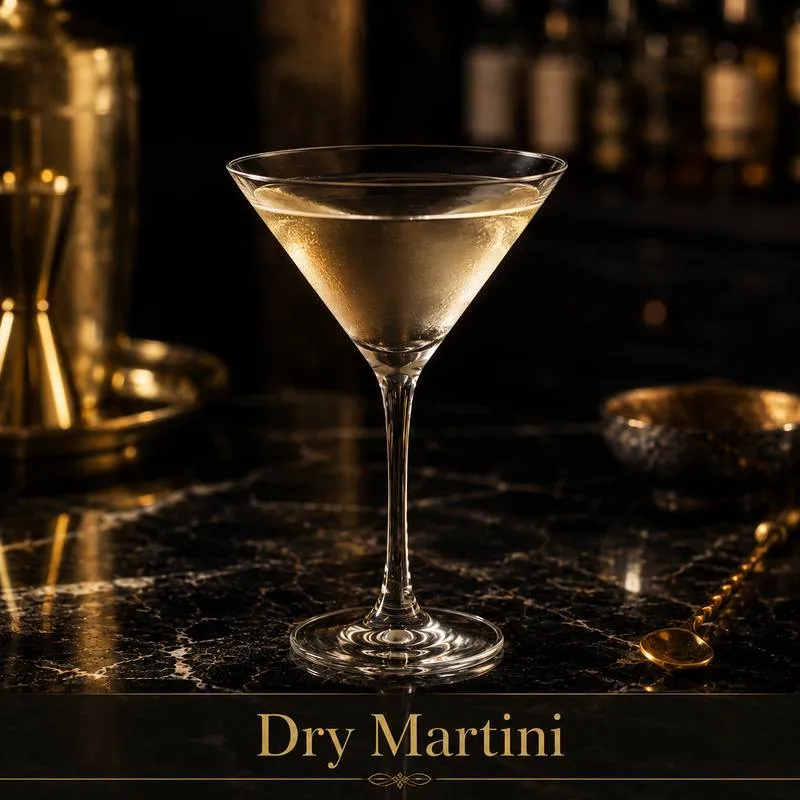
Dry Martini Cocktail Recipe from the United States
Pronunciation: DRY mar-TEE-nee · Origin: United States · Glass: Martini Glass · Difficulty: Intermediate · Strength: Very High (28 to 32% ABV) · Serve: Very Cold · Style: Flat · Era: Pre-Prohibition · Flavour: Crisp, Botanical, Dry, Elegant
What it tastes like
Crisp, cold, and botanically complex. Dry vermouth adds a gentle herbal whisper that frames the gin without competing with it. The lemon twist delivers bright citrus oil on the nose; an olive shifts the whole drink savory. Unmistakably elegant in its minimalism.
Ingredients
- 70 ml (2.25 oz) London Dry Gin
- 10 ml (0.25 oz) dry vermouth (Noilly Prat or Dolin Dry)
- 1 dash orange bitters (optional)
- 1 twist lemon peel or olive, for garnish
Method
- Chill a martini glass with ice water while preparing.
- Fill a mixing glass with ice.
- Add gin, dry vermouth and the orange bitters, if using.
- Stir gently for 25 to 30 seconds: do not shake; shaking clouds the drink and over-dilutes.
- Discard ice water from the glass and strain the cocktail in.
- For lemon twist: express the peel skin-side down over the surface to release oils, run it around the rim, then rest on the edge.
- For olive: thread 1 to 3 olives on a cocktail pick.
Sourcing the ingredients
Sourcing difficulty: Easy
Use quality London Dry Gin: Beefeater, Tanqueray, or Bombay Sapphire are reliable. Keep vermouth refrigerated after opening and use within 3 weeks; stale vermouth ruins the drink. The gin-to-vermouth ratio is personal: classic is 5:1, extra-dry is 10:1 or beyond.
History
The martini evolved from the late 19th-century Martinez cocktail through a gradual drying process as American tastes shifted from sweet to dry and London Dry Gin replaced Old Tom. By the early 20th century it had become the most prestigious cocktail in American drinking culture. A popular story credits a bartender at New York’s Knickerbocker Hotel with the first dry martini in 1911 or 1912, though it is unproven. Its exact origin and date are uncertain. The ratio grew progressively drier over the decades: Winston Churchill is famously said to have been satisfied with bowing in the direction of France, and Hemingway’s character Colonel Cantwell, in Across the River and Into the Trees, orders ‘Montgomerys. Fifteen to one’, a ratio said to be named after Field Marshal Montgomery’s preferred battlefield odds.
Cultural significance
No cocktail carries more cultural weight. The martini glass silhouette is the universal symbol of cocktail culture; many V-shaped drinks are called ‘martinis’ regardless of contents. James Bond’s ‘shaken not stirred’ specification, contrary to the classic stirred technique, has defined popular understanding for generations. The perpetual debates over gin vs. vodka, shaken vs. stirred, olive vs. twist have fueled more barroom conversation than any other drink. It is simultaneously the cocktail of sophistication, literary ambition, power lunches, and quiet excess.
Food pairings
- Oysters on the Half Shell
- Smoked Salmon Blinis
- Marcona Almonds and Olives
- Caviar
Get Meridian
Keep all 888 drinks from 141 countries in one app: search any drink by name, browse by country, filter by flavour, switch between ml and oz and save your favourites. One price, no ads, no account, and it works offline.