 Meridian
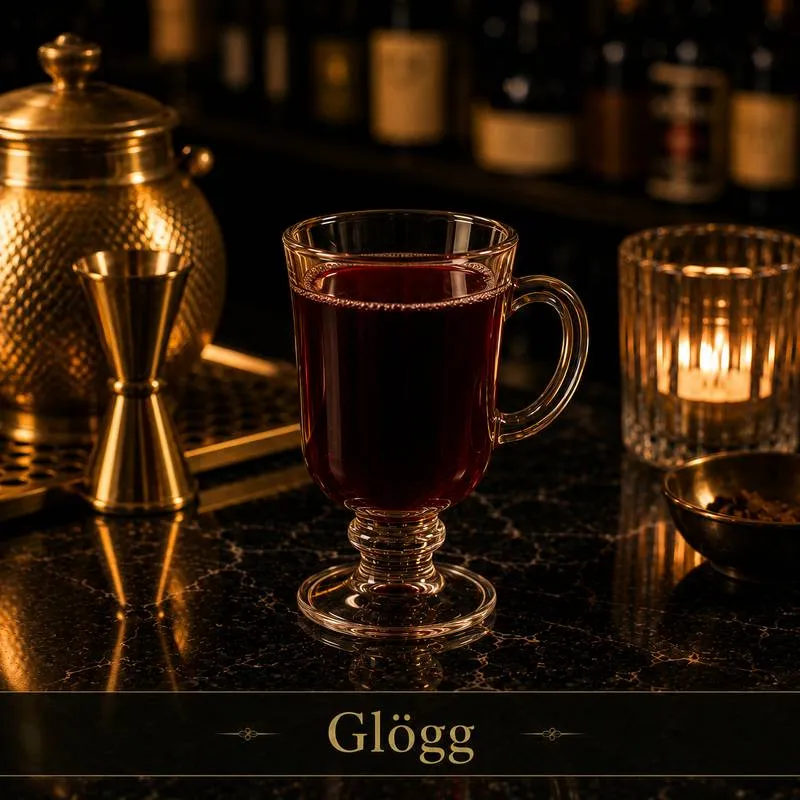
Glögg Cocktail Recipe from Sweden
Pronunciation: GLUG · Origin: Sweden · Glass: Heatproof Mug or Traditional Glögg Glass · Difficulty: Intermediate · Strength: about 16% ABV · Serve: Hot (60 to 70°C / 140 to 158°F) · Style: Flat · Era: Victorian · Season: Christmas, Winter · Flavour: Spicy, Sweet, Rich, Warming, Aromatic
What it tastes like
Warming and festive: wine’s fruity depth is transformed by cardamom’s floral spice (the defining Nordic note), cloves’ sharp warmth, and cinnamon’s sweet earthiness. The aquavit or brandy fortifies and adds aromatic complexity. Rich, spiced, and entirely associated with cold, dark Scandinavian winters.
Ingredients
- 60 ml (2 oz) Swedish Aquavit or Brandy
- 375 ml (12.75 oz) Red Wine (Shiraz or Zinfandel)
- 60 ml (2 oz) Port Wine
- 5 pieces Cardamom Pods (lightly crushed)
- 4 pieces Whole Cloves
- 2 pieces Cinnamon Sticks
- 3 pieces Orange Peel Strips
- 60 g (2.1 oz) Sugar
- 2 tbsp Raisins and Blanched Almonds
Method
- Combine the whole spices (cardamom pods, cloves, cinnamon stick) and orange peel strips in a saucepan with port wine and heat very gently for 15 minutes: do not boil.
- Add red wine and sugar, stirring until sugar dissolves. Heat to approximately 70°C (158°F): hot but not simmering.
- Remove from heat and add aquavit or brandy.
- Strain through a fine sieve if desired, or serve with the spices for a more rustic presentation.
- Pour into heat-safe mugs or traditional glögg glasses.
- Add a small spoonful of raisins and blanched almonds to each mug before serving.
Sourcing the ingredients
Sourcing difficulty: Easy
Green cardamom pods are the signature spice of Swedish glögg and cannot be substituted, find them at any supermarket or Asian grocery. Swedish aquavit (O.P. Anderson or Skåne) adds authenticity; brandy is an acceptable substitute. Use a full-bodied red wine to stand up to the spices.
History
Glögg (from the Swedish ‘glödga,’ meaning to mull or heat) is the Swedish version of mulled wine, with roots in the 16th century, when King Gustav Vasa reportedly enjoyed wine spiced with cinnamon, ginger, cardamom and cloves. ‘Glödgat vin’ is recorded in Sweden from the 1610s, and recipes and advertisements for glögg itself, including servings at Christmas with almonds and raisins, appear in the later 19th century. Who first made it, and exactly when, is not documented.
Swedish glögg is distinguished from German Glühwein and other European mulled wines by its characteristic use of cardamom and the addition of aquavit or brandy, which often gives it a higher alcohol content. The tradition of serving glögg with raisins and blanched almonds in the cup is shared across the Nordic countries; the almonds and raisins are eaten with a small spoon after the drink is finished.
Cultural significance
Glögg is one of Sweden’s most beloved seasonal traditions, so central to the Christmas calendar that its smell, cardamom, cloves, cinnamon, is as evocative of Swedish December as anything in the culture. The Swedish Christmas market tradition (julmarknad) is inseparable from glögg, which is served hot throughout the Christmas season. In Swedish homes, making glögg from scratch is a ritual passed between generations, with family recipes closely guarded. The drink unites the entire country across class and generation, from the Christmas party at the local church to the julbord at fine restaurants, making it Sweden’s great democratic seasonal drink.
Food pairings
- Cheese board
- Grapes and walnuts
- Dark chocolate
- Charcuterie
Get Meridian
Keep all 888 drinks from 141 countries in one app: search any drink by name, browse by country, filter by flavour, switch between ml and oz and save your favourites. One price, no ads, no account, and it works offline.