 Meridian
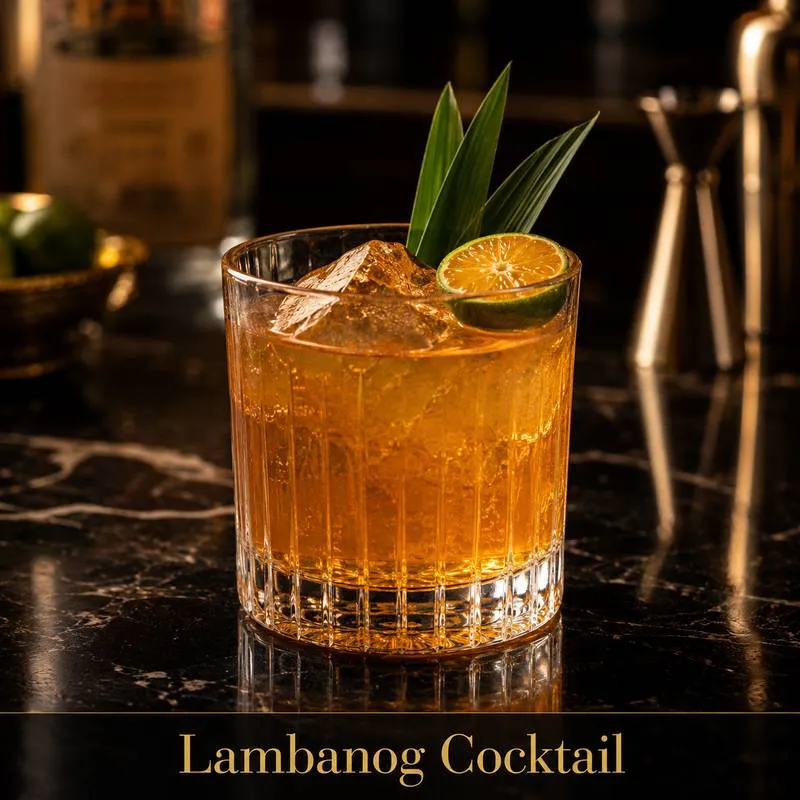
Lambanog Cocktail Recipe from the Philippines
Pronunciation: lahm-bah-NOG KOK-tayl · Origin: Philippines · Glass: Rocks Glass · Difficulty: Beginner · Strength: 14% ABV · Serve: Cold · Style: Flat · Era: Modern Craft · Flavour: Fruity, Citrusy, Sweet, Refreshing
What it tastes like
Tropical and pure: lambanog’s clean coconut palm character (far less sweet than coconut liqueur) provides a fresh spirit base, brightened by calamansi’s distinctive citrus (between lime and mandarin), softened by honey, and extended by coconut water. Unmistakably Filipino and refreshing.
Ingredients
- 60 ml (2 oz) Lambanog (coconut palm spirit)
- 20 ml (0.75 oz) Calamansi juice (or lime juice)
- 15 ml (0.5 oz) Honey syrup
- 60 ml (2 oz) Coconut water
- 1 piece Calamansi half (garnish)
- 1 piece Small pandan leaf (garnish, optional)
Method
- Combine lambanog, calamansi juice, and honey syrup in a shaker with ice.
- Shake for 12 seconds.
- Strain into a rocks glass over ice.
- Top with coconut water.
- Garnish with a calamansi half and a small pandan leaf if available.
Sourcing the ingredients
Sourcing difficulty: Hard
Lambanog is rarely available outside the Philippines. Check Filipino specialty food stores or online importers. Coconut palm spirits from other Asian producers can substitute. Calamansi is available at Filipino and some Asian grocery stores; lime juice is a substitute.
History
Lambanog is a traditional Filipino coconut palm spirit rooted in tuba, the palm wine that Filipinos made before Spanish colonization. The spirit is produced by tapping the unopened flower bud of the coconut tree, collecting the sap (tuba), and distilling it in indigenous stills traditionally built from two large pans (kawa), a hollowed-out log and a bamboo tube. Clear records of the distilled spirit date from the Spanish colonial period, when it was known as vino de coco and was also produced in the Visayas; a 1619 letter from Sebastian de Pineda to Philip III complained that Filipino distillers were undercutting Spanish wine in New Spain. Quezon Province in Luzon is today the leading producer of lambanog, and producers there have worked to bring traditional lambanog to modern markets with various infused flavors. When lambanog was first distilled is unclear, and who first made this cocktail is not documented.
Cultural significance
Lambanog occupies a complicated position in Filipino society: celebrated as an indigenous product rooted in pre-colonial palm wine traditions, yet associated with rural and lower-class consumption rather than the San Miguel beer and imported spirits of urban middle-class life. Recent craft spirits movements have repositioned lambanog as a source of Filipino pride and culinary identity, with producers developing premium aged and flavored versions. The spirit’s connection to the coconut tree, the ‘tree of life’ in Filipino folk culture, providing food, oil, fiber, and shelter, gives it deep symbolic roots in Philippine cultural identity.
Food pairings
- Lechon
- Kare-kare
- Filipino adobo
- Grilled seafood
Get Meridian
Keep all 888 drinks from 141 countries in one app: search any drink by name, browse by country, filter by flavour, switch between ml and oz and save your favourites. One price, no ads, no account, and it works offline.