 Meridian
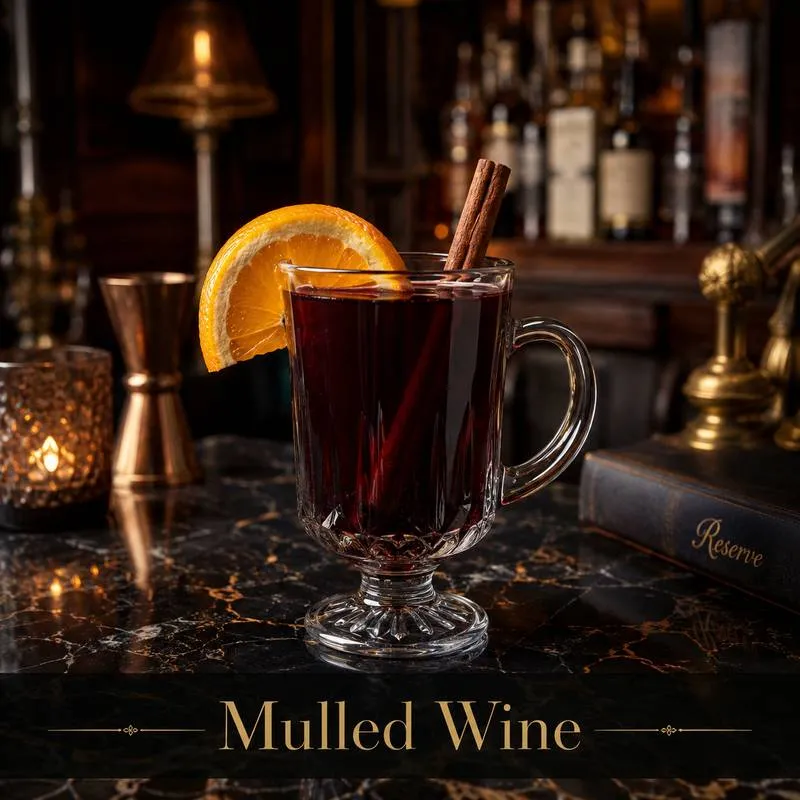
Mulled Wine Cocktail Recipe from the United Kingdom
Pronunciation: MULD WYNE · Origin: United Kingdom · Glass: Heatproof mug or glass · Difficulty: Beginner · Strength: about 10 to 13% ABV · Serve: Hot (60 to 70°C / 140 to 158°F) · Style: Flat · Era: Ancient & Medieval · Season: Christmas, Winter · Flavour: Spiced, Warming, Fruity, Sweet, Aromatic
What it tastes like
Warming, spiced, and fragrant, with rich red-fruit depth sweetened and rounded by sugar and laced with cinnamon, clove, anise, and bright orange. Cosy and aromatic, with a gentle alcoholic glow.
Ingredients
- 750 ml (25.25 oz) Red Wine (medium-bodied, fruity)
- 1 piece Orange (sliced, plus zest)
- 60 g (2.1 oz) Sugar or Honey
- 2 pieces Cinnamon Sticks
- 6 pieces Whole Cloves
- 2 pieces Star Anise
- 60 ml (2 oz) Brandy (optional)
Method
- Pour the red wine into a saucepan and add the sugar, orange slices and zest, cinnamon sticks, cloves, and star anise.
- Warm over low-medium heat, stirring until the sugar dissolves.
- Bring just to a gentle steam: never let it boil, which would burn off the alcohol and turn the wine bitter.
- Reduce the heat and keep it hot but below a simmer (about 70°C) for 15 to 20 minutes to infuse the spices.
- Stir in the brandy at the end if using.
- Strain into heatproof mugs or glasses and garnish with a fresh orange slice or cinnamon stick. Serve hot.
Sourcing the ingredients
Sourcing difficulty: Easy
Use an inexpensive, fruity red: the spices and sugar transform it, so fine wine is wasted here. Whole spices (cinnamon, cloves, star anise) give a cleaner result than ground; a splash of brandy or port deepens the warmth.
History
Mulled wine is one of the oldest prepared drinks in the Western world, with origins reaching back to ancient Rome. The Romans heated and spiced their wine, a preparation recorded as ‘Conditum Paradoxum’ in the late Roman cookbook attributed to Apicius, and carried the practice across their empire as they expanded northward through Europe. As Roman influence spread, so did the custom of warming and spicing wine to make it palatable and to ward off the cold. No single creator or date of origin is documented.
In the Middle Ages, spiced wine became hugely popular across Europe under names such as ‘Hippocras’ or ‘Ypocras,’ strained through a conical cloth filter called a ‘Hippocrates’ sleeve’ and prized both as a luxury and as a supposed health tonic, since exotic spices were believed to balance the body’s humours. In Britain it became firmly associated with Christmas and midwinter festivities, a connection cemented in the Victorian era and immortalised by the ‘Smoking Bishop’ offered by a reformed Scrooge in Dickens’s ‘A Christmas Carol.’
Cultural significance
Mulled wine is the quintessential drink of European winter, inseparable from Christmas markets, holiday gatherings, and the cold-weather conviviality of the festive season. Its warming spices and communal preparation make it a centrepiece of seasonal hospitality across Britain and the Continent, each country boasting its own beloved version: Glühwein in Germany, glögg in Scandinavia, vin chaud in France. As a tradition with roots reaching from ancient Rome through medieval Europe to the modern Christmas market, it represents one of the most enduring continuities in Western drinking culture, a ritual of warmth and togetherness in the darkest months.
Food pairings
- Mince pies
- Gingerbread
- Roasted chestnuts
- Christmas cake
Get Meridian
Keep all 888 drinks from 141 countries in one app: search any drink by name, browse by country, filter by flavour, switch between ml and oz and save your favourites. One price, no ads, no account, and it works offline.