 Meridian
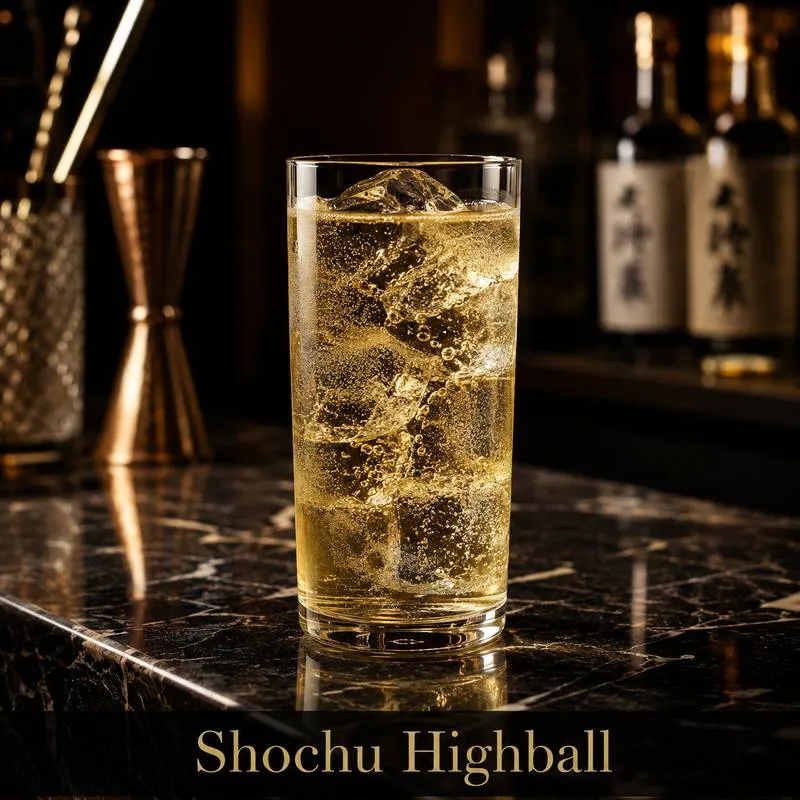
Shochu Highball Cocktail Recipe from Japan
Pronunciation: SHOH-choo HY-bawl · Origin: Japan · Glass: Highball Glass · Difficulty: Beginner · Strength: about 7% ABV · Serve: Cold · Style: Sparkling · Era: Mid-Century Classic · Flavour: Refreshing, Dry, Citrusy, Herbal
What it tastes like
Light and clean with the gentle grain character of barley shochu: subtly earthy, slightly cereal, and very refreshing. The soda adds lift and the lemon provides a bright citrus frame. Significantly lighter than whisky highballs with a distinctly Japanese delicacy.
Ingredients
- 60 ml (2 oz) Mugi shochu (barley shochu)
- 120 ml (4 oz) Soda water
- 15 ml (0.5 oz) Fresh lemon juice
Method
- Fill a tall glass with ice: the more ice the better, as it prevents dilution.
- Pour shochu over the ice.
- Add lemon juice.
- Top with chilled soda water, pouring slowly down the side of the glass.
- Stir once gently from the bottom upward.
Sourcing the ingredients
Sourcing difficulty: Moderate
Iichiko is a widely available barley shochu brand. Sweet potato shochu (imo-jochu) like Satsuma Shiranami is less common but worth seeking out for a more earthy character.
History
Shochu has been distilled in Japan since at least the 16th century, with the oldest known reference being 1559 graffiti at Koriyama Hachiman Shrine in Kagoshima, where two carpenters complained that the priest never once gave them shochu. The spirit developed regionally (barley shochu in Oita and Nagasaki, sweet potato shochu in Kagoshima, and rice shochu in Kumamoto), each style reflecting local agricultural traditions. The shochu highball (chuhai) appeared shortly after World War II, when alcohol was in short supply and drinking dens in eastern Tokyo began mixing cheap shochu with soda to make it easier to drink; it later became an izakaya staple, and the first canned chuhai was released in 1983. Who first mixed it, and exactly when, is not documented. In 2003, domestic shipments of shochu overtook those of sake in Japan for the first time, a milestone that reflected changing tastes toward lighter, more sessionable drinks.
Cultural significance
Shochu is the heart of izakaya culture: Japan’s beloved casual drinking establishments where after-work gatherings cement social bonds. Unlike sake, which carries ceremonial weight, shochu is democratic and everyday. The variety of base ingredients (barley, sweet potato, rice, buckwheat, sesame) gives each regional style a sense of geographic identity and local pride. Kagoshima residents in particular have fierce loyalty to their imo-jochu tradition, making it a marker of Kyushu identity.
Food pairings
- Yakitori
- Japanese pickles
- Grilled fish
- Ramen
Get Meridian
Keep all 888 drinks from 141 countries in one app: search any drink by name, browse by country, filter by flavour, switch between ml and oz and save your favourites. One price, no ads, no account, and it works offline.